In the shadow of the world’s eighth highest mountain lies a trekking route that captures everything magical about the Himalayas while avoiding the crowds that flock to more famous circuits. The Manaslu Circuit Trek, circumnavigating the magnificent Manaslu massif at 8,163 meters, offers adventurers an authentic wilderness experience that rivals the Annapurna Circuit in scenery and surpasses it in solitude. This is Nepal as it once was: remote villages untouched by mass tourism, ancient trade routes still walked by yak caravans, and mountain vistas that take your breath away—literally and figuratively.
The Mountain of the Spirit
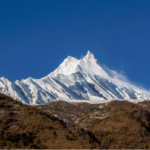
Manaslu derives its name from the Sanskrit word “Manasa,” meaning “Mountain of the Spirit” or “Soul.” This eighth highest peak on Earth commands respect not only for its height but also for its formidable climbing history and the spiritual significance it holds for local communities. The mountain’s presence dominates the trek, appearing and disappearing through the journey like a recurring meditation on nature’s power.
The Manaslu Conservation Area, established in 1998, protects 1,663 square kilometers of diverse ecosystems ranging from subtropical forests to alpine meadows and glacial landscapes. This protection has helped maintain the region’s pristine character while supporting sustainable tourism that benefits local communities without overwhelming them.
An Epic Circumnavigation
The Manaslu Circuit trek typically requires 14-18 days to complete, making it a serious undertaking that rewards committed trekkers with one of Nepal’s most complete mountain experiences. The journey begins in Soti Khola or Machha Khola, accessed by a long but scenic drive from Kathmandu through terraced hillsides and along rushing rivers.
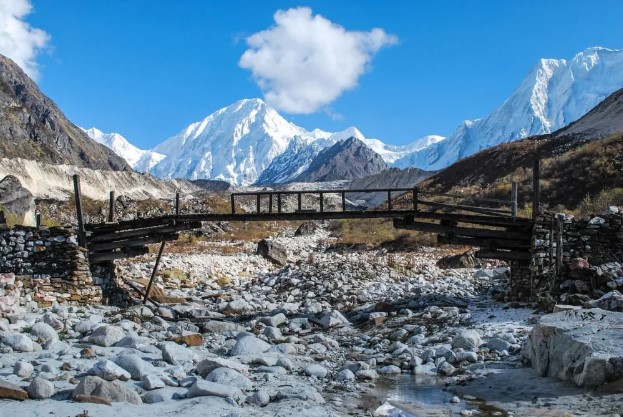
The trail follows the Budhi Gandaki River valley, initially through subtropical forests where waterfalls cascade down moss-covered cliffs and suspension bridges sway over turquoise waters. The early days involve significant elevation gain through landscapes that shift from Hindu lowlands to increasingly Buddhist highlands, marking not just a physical journey but a cultural transition.
Villages like Jagat, Philim, and Deng showcase the architectural transition from stone houses with slate roofs to the flat-roofed structures typical of Tibetan influence. The trail alternates between forest paths, riverside routes, and exposed traverses across cliff faces where the river roars hundreds of meters below. This variety keeps the journey engaging, with each day presenting new landscapes and challenges.
Cultural Crossroads
One of the Manaslu Circuit’s defining features is its rich cultural tapestry. The region serves as a meeting point between various ethnic groups, each contributing to the area’s unique identity. Lower elevations are inhabited primarily by Gurung and Magar communities, while higher villages are home to people of Tibetan descent, often referred to as Nubri or Tsum people.
Samagaon, a substantial village at 3,530 meters, serves as a crucial acclimatization stop and cultural hub. The village monastery, visited by Buddhist pilgrims, contains ancient texts and religious artifacts. From here, trekkers can take acclimatization hikes to Manaslu Base Camp or Pungyen Gompa, both offering spectacular mountain views and insights into Buddhist practices that have continued uninterrupted for centuries.
The village of Samdo, near the Tibetan border, historically served as a trading post where Tibetan and Nepali merchants exchanged goods. Though trade has diminished since Tibet’s closure, the village retains its frontier character, with stone corrals for yaks and prayer flags streaming in the constant wind.
Larkya La: The Ultimate Challenge
The trek’s crowning achievement is crossing Larkya La Pass at 5,106 meters, one of the longest and most challenging pass crossings in Nepal. The approach to the pass involves ascending from Samdo through increasingly barren terrain to Dharamsala (also called Larkya Phedi), a basic shelter where trekkers spend an uncomfortable but necessary night before the summit attempt.
Pass day typically begins around 3 or 4 AM, with headlamps illuminating the pre-dawn darkness as trekkers ascend the final slopes. The crossing can take 8-10 hours from Dharamsala to Bimthang, including the descent. At the pass itself, prayer flags flutter wildly in the wind, and views extend across a spectacular array of peaks including Himlung Himal, Cheo Himal, and Kang Guru, along with the massive bulk of Manaslu itself.
The descent from Larkya La is long and knee-challenging but leads to the beautiful high pasture of Bimthang, surrounded by rhododendron forests. The relief of completing the pass, combined with the dramatic landscape change, makes Bimthang feel like a paradise after the stark high-altitude environment.
Remote and Authentic
What distinguishes the Manaslu Circuit from more popular treks is its remoteness and limited infrastructure. Teahouses exist but are simpler and more rustic than those on the Annapurna or Everest circuits. Electricity may be unreliable or absent, hot showers are rare luxuries, and menu options are limited. These limitations, however, contribute to the trek’s authentic character.
The trail sees far fewer trekkers than Nepal’s famous circuits, meaning quieter paths, more genuine interactions with locals, and a stronger sense of wilderness. Villages haven’t been transformed into trekking service centers but remain working communities where tourism supplements rather than dominates the economy. This authenticity appeals to trekkers seeking experiences beyond the well-worn tourist trail.
Challenges and Preparations
The Manaslu Circuit is not a beginner trek. The combination of length, altitude, and the demanding Larkya La crossing requires excellent physical fitness and previous high-altitude trekking experience. Altitude sickness is a real risk, making proper acclimatization essential. Most itineraries include rest days in Samagaon or side trips to aid acclimatization.
Trekking in the Manaslu Conservation Area requires both the Manaslu Restricted Area Permit and the Manaslu Conservation Area Permit. Additionally, regulations mandate trekking with a registered guide, which actually enhances the experience through local knowledge, cultural insights, and logistical support.
The best seasons are spring (March to May) and autumn (September to November). Autumn offers clearer skies and stable weather, while spring brings blooming rhododendrons at lower elevations. Winter is possible for experienced trekkers willing to face snow and cold, while monsoon season presents challenges including leeches, landslides, and obscured views.
Ecological Diversity
The trek’s ecological journey is remarkable, passing through multiple climate zones. Lower elevations feature subtropical forests with banana trees and bamboo groves. Mid-elevations showcase temperate forests of pine, rhododendron, and oak. Higher elevations transition to alpine meadows and eventually the barren, glacial landscapes near the pass.
Wildlife includes Himalayan tahr, blue sheep, musk deer, and if extremely fortunate, the elusive snow leopard. Bird species range from colorful Himalayan monals to lammergeiers soaring above the high passes. This biodiversity makes the trek appealing not just for mountain enthusiasts but also for nature lovers.
The Road Less Traveled
The Manaslu Circuit trek represents what many trekkers seek but struggle to find: genuine adventure in an era of crowded trails and commercialized experiences. It offers the scale and drama of Nepal’s famous treks without the traffic jams at lodges or the feeling of walking a superhighway.
For those willing to embrace longer days, simpler accommodations, and the challenges of a demanding high pass, the Manaslu Circuit delivers an unforgettable Himalayan experience. It’s a trek that feels like discovery, where each day unfolds with the excitement of exploring terrain that remains, in spirit if not in fact, genuinely remote. In choosing Manaslu, trekkers don’t just walk around a mountain—they step into an adventure that honors what made Himalayan trekking legendary in the first place.