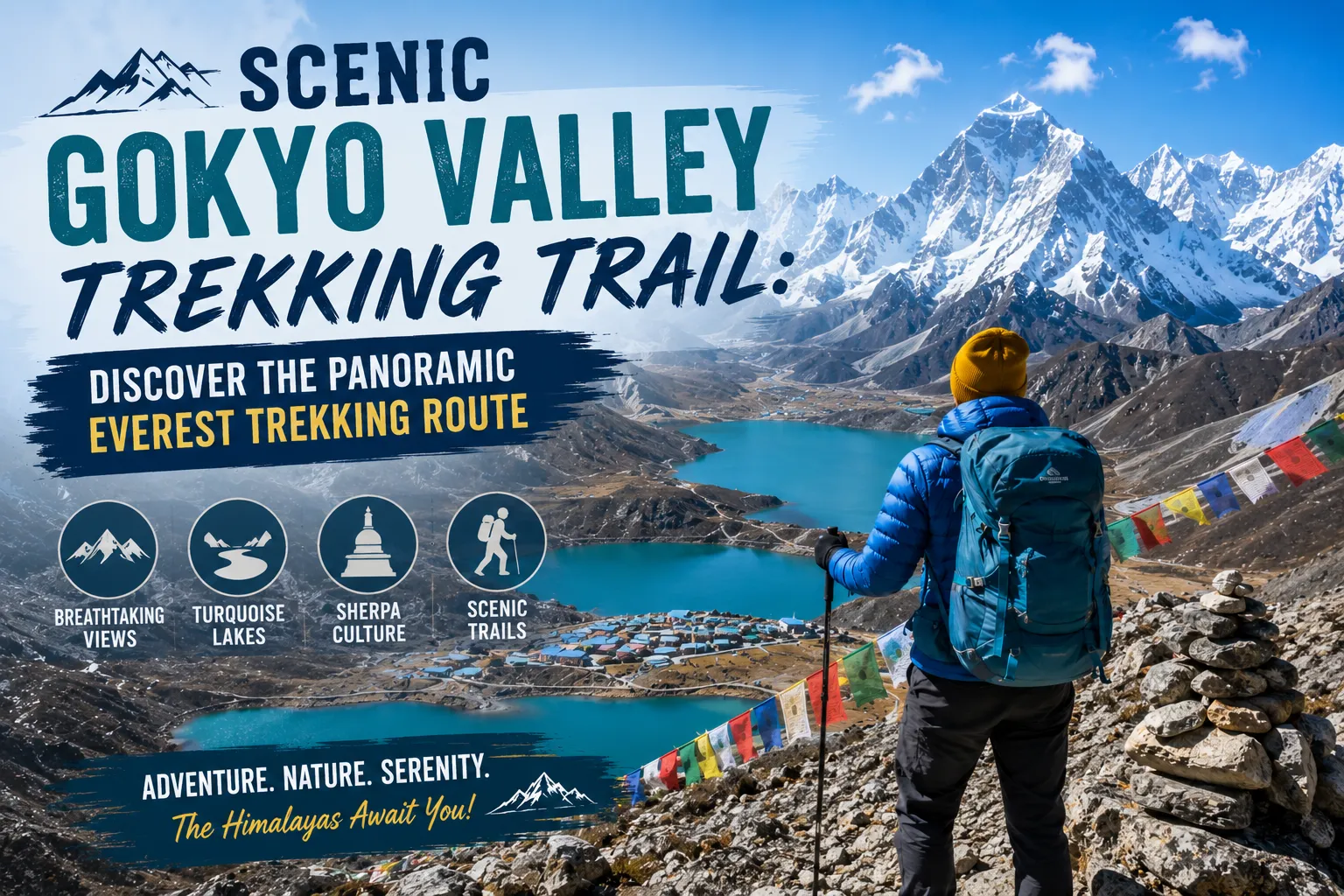
The Everest region of Nepal is home to some of the most breathtaking mountain landscapes on Earth. While the classic Everest Base Camp trek attracts thousands of trekkers every year, many experienced hikers and nature enthusiasts seek a quieter and more scenic alternative. The scenic Gokyo Valley trekking trail offers exactly that—a remarkable journey through pristine valleys, turquoise glacial lakes, traditional Sherpa villages, and stunning Himalayan viewpoints.
Known as one of the most beautiful routes in the Khumbu region, the Gokyo Valley trek combines adventure, culture, and extraordinary scenery. Trekkers who choose this route are rewarded with fewer crowds and some of the finest mountain panoramas in Nepal. Often described as the ultimate panoramic Everest trekking route, the trail provides unforgettable views of Mount Everest and several other towering Himalayan peaks.
Introduction to the Gokyo Valley Trek
The Gokyo Valley Trek is located within Nepal’s Sagarmatha National Park, a UNESCO World Heritage Site. The trek follows a route similar to the Everest Base Camp trail during the initial stages before branching off toward the beautiful Gokyo Lakes and Gokyo Ri.
Unlike the more crowded Everest Base Camp route, the scenic Gokyo Valley trekking trail takes trekkers through peaceful landscapes where natural beauty remains largely untouched. The journey offers opportunities to experience authentic Sherpa culture while exploring one of the most spectacular mountain environments in the world.
The trek usually takes between 12 and 16 days, depending on the itinerary and acclimatization schedule. It is suitable for moderately fit hikers who are prepared for high-altitude trekking.
Why Choose the Scenic Gokyo Valley Trekking Trail?
Many trekkers consider the Gokyo Valley trek superior to other Everest region routes due to its incredible diversity of landscapes and viewpoints.
Stunning Glacial Lakes
One of the most distinctive features of the trek is the chain of six glacial lakes known as the Gokyo Lakes. These emerald and turquoise lakes create a magical contrast against the surrounding snow-covered mountains.
The lakes are among the highest freshwater lake systems in the world and hold both ecological and spiritual significance. Their crystal-clear waters reflect the surrounding peaks, creating picture-perfect scenery that captivates photographers and nature lovers alike.
Fewer Crowds
The scenic Gokyo Valley trekking trail attracts fewer trekkers compared to the Everest Base Camp route. This allows visitors to enjoy a more peaceful and immersive Himalayan experience.
The quieter environment enables trekkers to appreciate the sounds of nature, interact more closely with local communities, and experience a deeper connection with the mountains.
Exceptional Mountain Views
The trek offers some of the most impressive mountain panoramas in Nepal. From various viewpoints along the trail, trekkers can admire Everest, Lhotse, Makalu, Cho Oyu, and numerous other Himalayan giants.
These uninterrupted vistas make the route one of the most celebrated examples of a panoramic Everest trekking route.
Journey Through Sherpa Villages
A major highlight of the trek is the opportunity to explore traditional Sherpa settlements.
Villages such as Namche Bazaar, Dole, Machhermo, and Gokyo provide insight into the unique culture and lifestyle of the Himalayan people. Trekkers can visit monasteries, interact with local residents, and learn about centuries-old traditions that continue to shape life in the Everest region.
Namche Bazaar serves as the commercial center of the Khumbu region and is often called the gateway to Everest. The bustling town offers comfortable lodges, cafes, shops, and stunning mountain viewpoints.
As the trail ascends further into the valley, villages become smaller and more remote, offering a glimpse into authentic mountain life.
The Magnificent Gokyo Lakes
The Gokyo Lakes are undoubtedly one of the most remarkable attractions on the trek.
These glacier-fed lakes shimmer in shades of blue and green, creating a landscape unlike anywhere else in the Himalayas. Surrounded by rugged peaks and vast glaciers, the lakes offer a serene atmosphere that leaves a lasting impression on visitors.
The third lake is home to Gokyo Village, where trekkers typically spend the night before ascending Gokyo Ri. The setting is truly extraordinary, with dramatic mountain scenery reflected in the tranquil waters.
For many travelers, the lakes represent the defining feature of the scenic Gokyo Valley trekking trail.
Climbing Gokyo Ri: The Ultimate Viewpoint
No journey through Gokyo Valley is complete without climbing Gokyo Ri.
Standing at approximately 5,357 meters, Gokyo Ri offers one of the finest viewpoints in the Himalayas. The climb is challenging but highly rewarding.
From the summit, trekkers enjoy a breathtaking 360-degree panorama featuring:
-
Mount Everest
-
Lhotse
-
Makalu
-
Cho Oyu
-
Nuptse
-
The Ngozumpa Glacier
-
The Gokyo Lakes
Many experienced trekkers argue that the view from Gokyo Ri surpasses the panorama available from Kala Patthar near Everest Base Camp.
This spectacular vantage point firmly establishes the trek as a premier panoramic Everest trekking route.
Exploring the Ngozumpa Glacier
The Ngozumpa Glacier is another major attraction along the trek.
As the largest glacier in Nepal, it stretches for over 35 kilometers through the Khumbu region. Massive ice formations, glacial moraines, and rugged landscapes create an awe-inspiring environment.
Trekkers can observe the glacier from various points along the trail, gaining a greater appreciation for the powerful natural forces that have shaped the Himalayas over thousands of years.
The glacier adds an adventurous and dramatic element to the scenic Gokyo Valley trekking trail.
Wildlife and Natural Beauty
Sagarmatha National Park is rich in biodiversity and offers excellent opportunities for wildlife observation.
Trekkers may encounter:
-
Himalayan Thar
-
Musk Deer
-
Snow Pigeon
-
Himalayan Monal
-
Griffon Vultures
-
Various alpine bird species
The changing landscapes along the route contribute to the trek’s appeal. Dense pine forests, rhododendron woodlands, alpine meadows, rocky mountain terrain, and glacial environments create an ever-changing backdrop throughout the journey.
Each day presents new scenery and fresh opportunities for exploration.
Best Time to Trek
The best seasons for the Gokyo Valley trek are:
Spring (March to May)
Spring offers moderate temperatures, blooming rhododendrons, and generally stable weather conditions. Mountain views are often excellent, making it one of the most popular times to trek.
Autumn (September to November)
Autumn provides clear skies, crisp air, and exceptional visibility. Following the summer monsoon, the landscapes appear fresh and vibrant.
Both seasons offer ideal conditions for experiencing the scenic Gokyo Valley trekking trail and capturing incredible mountain photography.
Trek Difficulty and Preparation
The Gokyo Valley trek is considered moderately challenging.
Trekkers reach elevations above 5,000 meters, making proper acclimatization essential. Physical preparation should include cardiovascular exercise, hiking practice, and strength training.
Key preparation tips include:
-
Train regularly before departure.
-
Stay hydrated throughout the trek.
-
Follow a gradual ascent schedule.
-
Carry appropriate cold-weather gear.
-
Allow sufficient acclimatization days.
With proper planning, most reasonably fit individuals can successfully complete the trek.
Accommodation and Food
The route is supported by a network of teahouses that provide comfortable accommodation and meals.
Typical menu options include:
-
Dal Bhat
-
Fried rice
-
Noodles
-
Soups
-
Pancakes
-
Eggs
-
Potatoes
-
Tea and coffee
Accommodation becomes simpler at higher elevations but remains adequate for trekkers. Staying in local teahouses also supports the regional economy and enhances cultural interactions.
Combining Gokyo Valley with Everest Base Camp
Some trekkers choose to extend their journey by combining Gokyo Valley with Everest Base Camp through the challenging Cho La Pass.
This extended trek offers the best of both worlds:
-
The stunning Gokyo Lakes
-
Everest Base Camp
-
Kala Patthar
-
Cho La Pass
-
Multiple panoramic viewpoints
The combination creates one of the most comprehensive trekking adventures in the Himalayas.
Sustainable Trekking Practices
Protecting the fragile Himalayan environment is essential.
Trekkers should:
-
Carry reusable water bottles.
-
Minimize plastic waste.
-
Respect local customs.
-
Stay on designated trails.
-
Support locally owned businesses.
-
Follow Leave No Trace principles.
Responsible tourism helps preserve the beauty of the scenic Gokyo Valley trekking trail for future generations.
Conclusion
The Gokyo Valley Trek offers an unforgettable journey through some of the most beautiful landscapes in Nepal. With its turquoise glacial lakes, traditional Sherpa villages, vast glaciers, and spectacular mountain panoramas, the route provides a unique alternative to the classic Everest Base Camp trek.
For travelers seeking tranquility, natural beauty, and extraordinary Himalayan views, the scenic Gokyo Valley trekking trail delivers an experience that exceeds expectations. From the peaceful shores of the Gokyo Lakes to the summit of Gokyo Ri, every step reveals another breathtaking perspective of the world’s highest mountains.
As a truly exceptional panoramic Everest trekking route, the Gokyo Valley trek stands among the finest trekking adventures on the planet, offering memories that will last a lifetime.