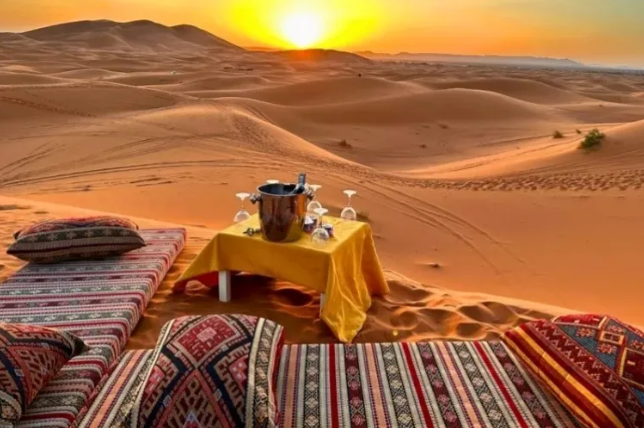
Morocco is a country of contrasts. In a single trip you can ride a camel across golden dunes at sunset, wake up to the call to prayer echoing through an ancient medina, and sip mint tea in a High Atlas mountain village. That range is why “from desert to medina” is the way most travelers experience Morocco. If you’re planning Morocco tours, here’s how to make that journey seamless, memorable, and worth every dirham.
Why Start in the Desert and End in the Medina
The desert gives you space and silence. The medina gives you color and chaos. Doing the desert first lets you reset. No traffic, no notifications, just stars and sand. By the time you arrive in Fes or Marrakech, you’re ready to dive into the sensory overload of the old city without feeling burned out. It also works logistically: most desert tours depart from Marrakech or Fes, and you can loop back to those cities for your medina exploration.
The Desert Section: Sahara, Not Just Sand
Most Morocco tours include either Merzouga or Zagora for the Sahara experience.
Merzouga is the classic choice. It’s reached via a long but scenic drive from Fes through the Middle Atlas, Ziz Valley, and palm groves. The payoff is Erg Chebbi, a 150-meter-high dune system where you can camp overnight. Expect a camel trek at dusk, dinner under the stars, Berber drumming, and sunrise over the dunes. Camps in 2026 range from basic Berber tents to luxury “glamping” setups with private bathrooms and hot showers.
Zagora is closer to Marrakech, about a 6-hour drive. The dunes at Erg Chigaga are smaller and less dramatic, but the trip is shorter and easier if you’re short on time. It’s also less crowded.
What to expect: Nights in the desert get cold even in summer. Days are hot from May to September. October to April is the sweet spot. Bring a scarf for wind and sand, and manage expectations—this isn’t a 5-star resort. It’s about the experience.
Transitioning Through the Atlas Mountains and Kasbah Route
Getting from the desert to the medina usually means crossing the High Atlas Mountains. This is where Morocco tours become cinematic.
The road from Merzouga to Marrakech passes through Rissani, Tinghir, and the Dades Valley, known as the “Road of a Thousand Kasbahs.” You’ll see fortified earthen villages, Todra Gorge’s 300-meter cliffs, and Aït Benhaddou, the UNESCO-listed ksar used in films like Gladiator and Game of Thrones.
The Tizi n’Tichka pass climbs to 2,260 meters. The views are stunning, but the road is winding. Break the journey with a stop in Ouarzazate, Morocco’s film capital, if you have time.
The Medina Experience: Fes and Marrakech
No Morocco tour is complete without at least one medina. These are UNESCO World Heritage sites for a reason.
Fes el-Bali is the oldest and least changed. It’s a maze of 9,000 alleys where donkeys still deliver goods. The highlights are the tanneries, Karaouine Mosque and University, and the souks for leather, ceramics, and spices. Guides are useful here. Without one, it’s easy to get lost and miss the context behind what you’re seeing.
Marrakech Medina is more accessible and tourist-ready. Djemaa el-Fna square is the heart—snake charmers by day, food stalls and musicians by night. Nearby you have the Bahia Palace, Majorelle Garden, and the souks organized by craft. It’s louder, faster, and more commercial than Fes, but it’s also where most people fall in love with Morocco.
Medina etiquette matters. Dress modestly, ask before taking photos of people, and don’t be surprised if shopkeepers invite you for tea. Bargaining is expected in souks. Start at 40-50% of the asking price and meet in the middle.
How Long Should Your Tour Be?
To go properly from desert to medina without rushing:
– 7 days: Marrakech → Ouarzazate → Dades → Merzouga → Marrakech. Hits desert, kasbahs, and one city.
– 9-10 days: Fes → Chefchaouen → Merzouga → Ouarzazate → Marrakech. Adds the Blue City and imperial cities.
– 12-14 days: Covers the north, desert, south, and both imperial cities with breathing room.
Shorter trips exist, but you’ll spend most of the time driving. Morocco rewards a slower pace.
Costs for 2026 Morocco Tours
Prices have stabilized but vary by style:
– Group tours: $600-$900 for 7-9 days. Includes transport, guide, basic hotels, some meals. Good for solo travelers on a budget.
– Private mid-range tours: $1,000-$1,500 for 8-10 days. Private driver-guide, 3-4 star riads, desert camp, breakfast included. Best balance for couples and small groups.
– Luxury tours: $2,000-$3,500 for 8-10 days. 5-star riads, luxury desert camps, private experiences like cooking classes or hot air balloons.
These prices exclude international flights, which run $700-$1,300 from the US and Europe in 2026. Always check what’s included. Some cheap tours add costs for desert camp, entrance fees, and meals on the road.
Practical Tips for the Journey
Packing: Layers are key. Mornings and desert nights are cold. Days are hot. A lightweight scarf works for sun, dust, and mosque visits. Good walking shoes are non-negotiable for medians with cobblestones and stairs.
Health: Stick to bottled water. Street food in Djemaa el-Fna is safe if you choose busy stalls with high turnover. Pharmacies are plentiful in cities.
Connectivity: Buy a local SIM at the airport. Orange and Inwi have good coverage even in the desert. Most riads and camps offer Wi-Fi, but expect it to be slow in rural areas.
Responsible travel: Choose tours that use local guides and Berber-run camps. Ask if the company pays fair wages and limits group sizes in fragile desert areas. Tourism is a major income source, but it needs to be sustainable.
Making It Yours
The “desert to medina” route is popular because it works, but you can tweak it. Add a day in Chefchaouen for blue streets and hiking. Stop in Essaouira for Atlantic coast and windsurfing after Marrakech. If you’re into history, include Volubilis and Meknes between Fes and the desert.
Book 3-4 months ahead for spring and fall 2026. Those seasons have the best weather and the most stable road conditions. Summer is doable but hot. Winter is quiet and cheap, though the Atlas can get snow.
Final Thought
Morocco doesn’t reveal itself all at once. The desert teaches you patience. The medina tests your senses. Together, they tell the story of a country that has balanced tradition and change for centuries.
Whether it’s your first Morocco trip or your fifth, going from desert to medina on Morocco tours gives you the full picture. Come for the landscapes, stay for the people, and leave with stories you can’t get anywhere else.
Want me to map out a 10-day “desert to medina” itinerary with daily stops and costs?