 The Everest region does not look the same from start to finish.
One of the most interesting parts of the journey is watching the land change as you move higher. Green areas slowly give way to open slopes. Trees become less common. The air feels colder. The trail takes on a more rugged appearance.
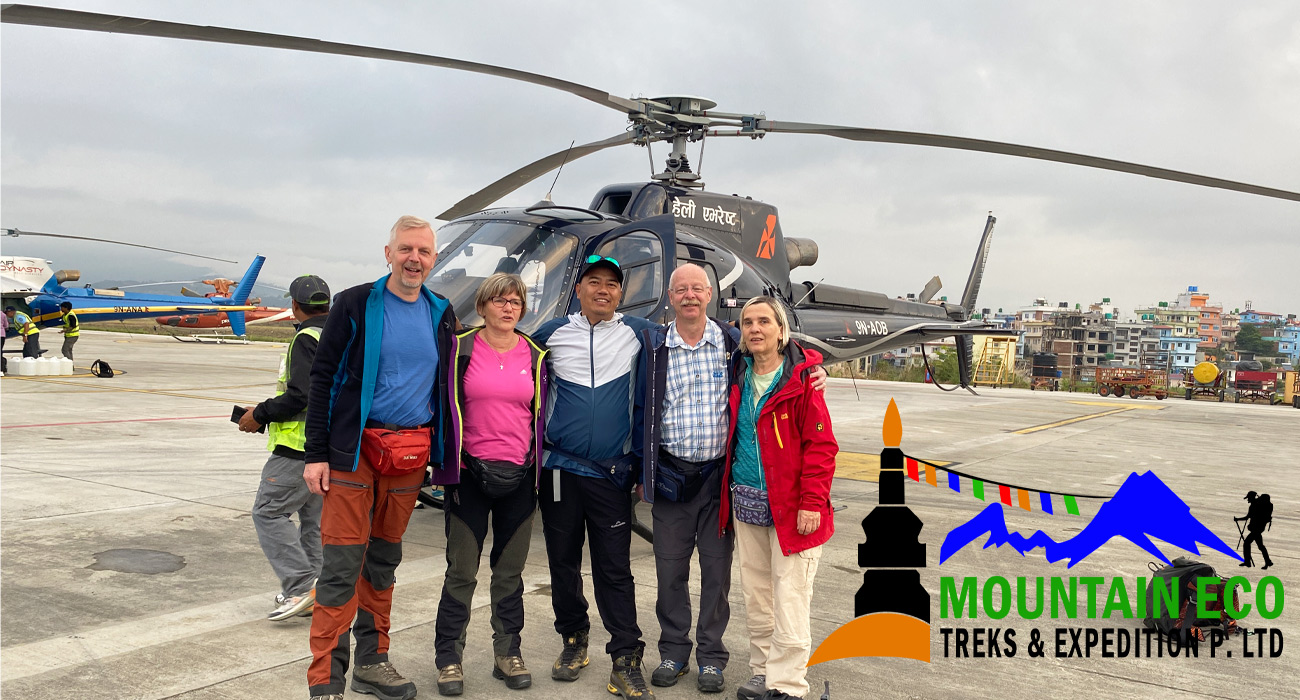
The Everest Base Camp Trek With Helicopter Return lets you experience these changes at walking speed before offering a completely different view of the same landscape from a helicopter, depending on weather and safe flight conditions.
The Lower Trail Feels More Alive
The early part of the journey can have a softer appearance.
You may pass through areas with trees, plants, streams, and greener hillsides.
Look at the Plant Life
Trees and other vegetation are more noticeable at lower elevations.
The trail may also pass through shaded areas where the temperature feels different from exposed sections.
These early landscapes can be easy to take for granted because the famous high mountains are still ahead.
Water Is a Constant Part of the Landscape
Streams and rivers help shape the valleys.
You may hear moving water before you can see it.
Follow the Sound of the Valley
Bridges often connect sections of the trail across rushing water.
The sound can remain in the background for a long time as you walk.
It is a simple reminder that the mountains are not still or empty. Water is constantly moving through the region.
Stone Slowly Replaces Green
As the trail gains elevation, the scenery begins to feel more open.
You may see fewer trees and more exposed rock.
Notice the Change Under Your Feet
The walking surface can become rougher in places.
Large stones, steps, and rocky sections require more attention.
This is where good footwear becomes especially useful.
Rather than watching only the mountains, keep an eye on the trail itself.
The Air Becomes Part of the Landscape
At higher elevations, the air feels different.
The temperature can drop, and physical activity may require more effort.
Your Walking Speed May Change
You might naturally take shorter steps.
You may pause more often.
That is not a sign that the journey is going badly.
The body needs time to adjust to higher altitude.
Following a sensible pace and acclimatization plan is more important than trying to maintain your normal walking speed.
The Horizon Starts to Feel Larger
With fewer trees and more open terrain, distant mountains can become more visible.
The landscape begins to feel enormous.
Compare What You See
Look back toward the route you have already traveled.
A valley that once looked close may now seem far below.
This gives you a simple way to understand how much elevation you have gained.
Weather Can Completely Change the Scene
The landscape is not fixed.
Clouds may cover peaks.
Snow can change the color and texture of the trail.
Sunlight can make the same valley look completely different.
Wait and Watch
Do not assume that a hidden mountain will stay hidden.
Weather can shift quickly.
A short break in the clouds may reveal a dramatic view.
Sometimes the most memorable scenery is the scenery you almost missed.
Mountain Villages Fit Into the Landscape
Human settlements are part of the scenery too.
Homes, lodges, walls, paths, and religious structures appear between the mountains.
Notice How Buildings Match the Environment
Stone is commonly used in mountain construction.
Many structures look practical rather than decorative.
They are built for a demanding environment where weather and terrain affect everyday life.
Looking at these details can help you understand how people have adapted to the region.
The Landscape Can Feel Almost Empty
Higher sections may have fewer buildings and less vegetation.
The open space can feel dramatic.
Do Not Mistake Quiet for Lifeless
Even when you see very few people, the landscape is still active.
Wind moves across the slopes.
Water continues through valleys.
Clouds change the view.
The lack of noise can actually become one of the strongest parts of the experience.
Reaching Base Camp Shows How Much Has Changed
By the time you approach Everest Base Camp, the landscape can look very different from the beginning.
Remember Your Starting Point
Think back to the greener sections of the route.
Now compare them with the rocky, high-altitude environment around Base Camp.
The difference is easier to understand because you experienced every stage between the two.
The Helicopter Creates a New Perspective
The Everest Base Camp Trek With Helicopter Return allows you to experience the landscape in reverse.
Instead of slowly moving through different elevations on foot, you can see large sections from above during the return flight, if conditions allow.
See the Whole Region at Once
From the helicopter, individual trails become small lines.
Settlements appear tiny.
Valleys connect into one large system.
The landscape that seemed complicated from ground level can suddenly make more sense.
Look for Places You Recognize
The aerial journey can become more interesting when you recognize parts of the trail.
Match the View to Your Memories
You may remember a village you passed through.
You may recognize a river crossing.
You may see the trail winding along a slope.
These familiar points create a connection between the walking experience and the flight.
Remember That Mountain Flights Depend on Nature
The helicopter return is convenient, but it is not completely predictable.
Keep Your Plans Flexible
Cloud cover, wind, visibility, and safety conditions can affect helicopter operations.
If your onward travel is important, leave enough time between the helicopter journey and your next flight or major commitment.
A flexible schedule is simply good mountain planning.
Let the Landscape Tell the Story
The Everest Base Camp Trek With Helicopter Return is interesting because the landscape keeps changing.
You begin among greener surroundings.
You move through villages and river valleys.
The trail becomes more exposed.
Vegetation decreases.
Rock and open mountain terrain become dominant.
Then the helicopter gives you a final chance to see all those environments together.
From One Trail to a Bigger Picture
The Everest Base Camp Trek With Helicopter Return is more than a route toward a famous destination.
It is an opportunity to watch an entire mountain environment change as you climb.
The most rewarding part may be noticing details that are easy to miss: the first appearance of distant peaks, the gradual loss of trees, the sound of rivers, the shape of stone buildings, and the way clouds transform the view.
By the time you return by helicopter, you have already seen the Himalayas from the ground.
Now you can look down from above and understand how all those separate moments fit together.
That is what makes the journey memorable: you do not simply visit the landscape—you watch it change.
Frequently Asked Questions
How does the landscape change during the trek?
Lower areas generally have more vegetation and trees, while higher sections become colder, more open, and increasingly rocky.
Why does altitude affect the walking experience?
As elevation increases, there is less available oxygen, so physical activity can feel harder and your walking pace may naturally slow.
Can weather change the mountain views?
Yes. Clouds, sunlight, wind, and snow can quickly alter what you see.
What can I see from the helicopter?
When visibility is good, you may see valleys, trails, villages, mountain slopes, and areas you previously crossed on foot.
Can the helicopter return be delayed?
Yes. Flight operations depend on weather, visibility, and safety conditions, so travelers should keep their schedules flexible.