The Marrakech to Fes desert tour 4 days from stands Morocco’s quintessential overland adventure, connecting two of the country’s most captivating imperial cities through landscapes that shift dramatically from snow-capped Atlas peaks to endless Saharan dunes. This journey transcends simple transportation between destinations, transforming into an immersive exploration of Morocco’s diverse geography, ancient caravan routes, and timeless Berber traditions that have shaped this crossroads of Africa and the Mediterranean for millennia.
The Route: A Geographic and Cultural Odyssey
Unlike circular tours that return to the starting point, the Marrakech to Fes desert journey follows a linear path that maximizes exposure to Morocco’s most striking landscapes and cultural landmarks. This one-way routing eliminates repetitive scenery, ensuring each day brings fresh vistas and experiences. The itinerary encompasses UNESCO World Heritage Sites, dramatic gorges, palm-filled valleys, traditional kasbahs, and the majestic Erg Chebbi dunes near Merzouga.
The four-day timeframe allows for a comfortable pace that balances driving with exploration, avoiding the rushed feeling of shorter tours while remaining accessible to travelers who cannot commit to week-long expeditions. This duration provides sufficient time to genuinely experience the desert rather than simply visiting it, with opportunities for extended camel treks, cultural interactions, and the rhythm-slowing that desert environments naturally inspire.
Day One: Crossing the High Atlas to Dades Valley
The journey commences with an early departure from Marrakech, ascending through the High Atlas Mountains via the Tizi n’Tichka pass. This engineering marvel winds to over 2,260 meters elevation, offering panoramic views where clouds often drift below the roadway and Berber villages appear as clusters of earthen homes cascading down mountainsides. Roadside stops reveal women selling fossilized trilobites and ammonites, remnants of the ancient sea that once covered this region.
Ait Benhaddou provides the first major cultural immersion. This fortified village, constructed entirely from pisé (rammed earth mixed with straw), represents traditional southern Moroccan architecture at its finest. Walking through its narrow passages reveals architectural details refined over centuries: wooden door locks, communal grain storage, and defensive positions that once protected inhabitants from raiders. The UNESCO designation recognizes both its architectural significance and its role as a living museum where families continue traditional lifestyles.
Beyond Ouarzazate, the landscape transforms into the Valley of Roses, where in spring, fields bloom pink with Rosa damascena grown for perfume production. The Dades Valley, with its distinctive rock formations known as “monkey fingers,” offers the first night’s accommodation. Kasbahs converted into guesthouses provide comfortable lodging with traditional Moroccan meals, often featuring locally grown vegetables and preserved lemons that define regional cuisine.
Day Two: From Todra Gorge to the Sahara Gateway
Morning exploration of Todra Gorge reveals one of Morocco’s natural wonders: limestone cliffs rising 300 meters on either side of a narrow canyon where a clear river flows year-round. Rock climbers from around the world come to test themselves on these walls, while visitors can walk the cool canyon floor, observing how erosion sculpts stone over millennia.
The route continues through the Ziz Valley, an extraordinary oasis system where millions of date palms create a green ribbon through otherwise barren landscape. Strategic viewpoints allow photography of this dramatic contrast, illustrating how desert civilizations have always depended on precious water resources. Towns like Erfoud, known for fossil workshops, offer glimpses into local industries that have evolved around the region’s unique geology.
Arrival in Merzouga, the gateway to Erg Chebbi, marks the transition from civilization to pure desert. These dunes, reaching heights of 150 meters, represent Morocco’s most accessible and impressive sand formations. The afternoon typically includes time to rest before the evening camel trek, though some tours offer optional 4×4 excursions to explore the broader desert region, including visits to nomadic families or the seasonal Dayet Srji salt lake that sometimes attracts flamingos.
Day Three: Desert Immersion and Berber Traditions
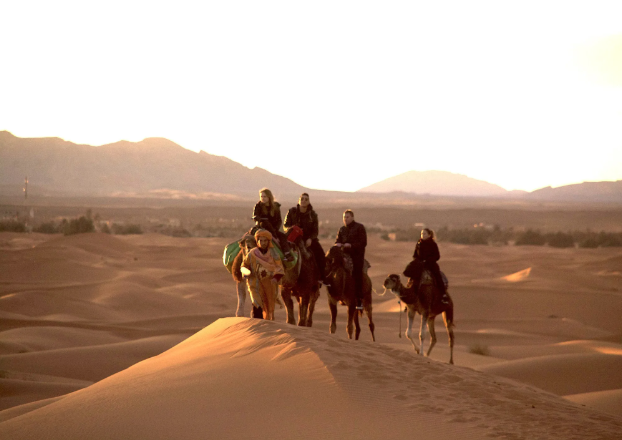
This day centers entirely on the Sahara experience. Camel treks depart in late afternoon, carrying travelers into the heart of Erg Chebbi as shadows lengthen across the dunes. The rhythmic swaying of camel movement and the silence broken only by wind and footfalls in sand create meditative experiences that modern life rarely offers. Guides, often from families who have navigated these dunes for generations, share knowledge about desert ecology, traditional navigation methods, and the nomadic lifestyle that persists despite modernization pressures.
Desert camps range from basic Berber-style tents to luxury options with en-suite facilities, but all share common elements: traditional architecture, communal dining, and evening entertainment featuring Berber music around campfires. The tagine dinners, slow-cooked beneath the stars, taste somehow better in this context, perhaps because the setting awakens senses dulled by urban environments.
Stargazing constitutes a highlight many travelers rank among their trip’s most memorable moments. The Sahara’s dark skies reveal celestial displays impossible to witness near cities. Constellations that appear faint elsewhere shine brilliantly, and the Milky Way arches visibly overhead. This cosmic perspective reminds visitors of humanity’s small place in vast systems, often prompting reflection and conversations that continue long into the night.
Dawn brings another essential desert experience: sunrise observed from atop a high dune. The effort required to climb soft sand in darkness pays dividends as the eastern sky transforms through purples and roses to brilliant golds, and the dune field reveals its full majesty in low-angle light that emphasizes every ripple and contour.
Day Four: The Journey to Fes
The final day involves Morocco’s longest single driving segment but compensates with diverse scenery and cultural stops. The route passes through the Ziz Valley again, then enters the Middle Atlas Mountains, a region dramatically different from the High Atlas crossed on day one. Cedar forests appear, providing habitat for Barbary macaques, North Africa’s only monkey species that often approach roadside stops seeking food from tourists.
Ifrane, sometimes called “Morocco’s Switzerland,” offers a surprising contrast with its European-influenced architecture, manicured gardens, and cool climate. This planned city, built during French colonial times, serves as a popular domestic tourism destination and houses one of Morocco’s prestigious universities. The juxtaposition between desert camps of the previous night and Ifrane’s orderly streets illustrates Morocco’s remarkable diversity within relatively compact geography.
The descent from the Middle Atlas toward Fes provides final panoramic views before entering Morocco’s oldest imperial city. Arrival typically occurs in late afternoon or early evening, with drop-offs at riads or hotels in the medina. This endpoint in Fes proves ideal for travelers planning to explore the city’s medieval medina, renowned tanneries, and ancient universities before continuing to Chefchaouen, Casablanca, or other destinations.
Selecting the Right Tour Operator
Four-day tours represent significant investments of time and money, making operator selection crucial. Quality indicators include transparent pricing with clear inclusions/exclusions, modern well-maintained vehicles with air conditioning, experienced multilingual guides, flexible itineraries that accommodate reasonable requests, small group sizes (typically 6-8 maximum for standard tours), and authentic accommodation selections that balance comfort with cultural immersion.
Reading recent reviews provides insight into actual experiences versus marketing promises. Pay attention to comments about guide knowledge, vehicle conditions, meal quality, and how operators handle inevitable challenges like weather changes or mechanical issues. The cheapest options often compromise on critical elements like accommodation quality, meal variety, or guide expertise.
Private tours offer maximum flexibility and personalized attention but command premium prices. Shared tours provide social dynamics and affordability, appealing to solo travelers or those enjoying group experiences. Some operators offer semi-private options for 2-4 people, balancing intimacy with reasonable costs.
Conclusion
The Marrakech to Fes desert tour 4 days delivers Morocco’s essence in concentrated form: ancient cities, mountain passes, desert dunes, gorges, oases, and the warm hospitality that makes Moroccan travel so rewarding. This journey accomplishes what few itineraries can provide both comprehensive geographic coverage and sufficient time in each location to move beyond superficial tourism into genuine experience.
The tour’s linear structure eliminates backtracking while connecting two imperial cities that merit multi-day explorations, making it ideal for travelers wanting to maximize their Moroccan adventure without constant base changes. The Sahara component transforms what could be simple city-to-city transportation into a transformative adventure that participants remember long after other travel details fade.
For those seeking authentic Morocco beyond guidebook clichés, this four-day journey through mountains, desert, and valleys offers immersion in landscapes and cultures that have captivated travelers for centuries and continue to inspire wonder in the smartphone age.
Frequently Asked Questions
What’s included in a typical four-day Marrakech to Fes desert tour package?
Standard packages include transportation in air-conditioned 4×4 vehicles or minivans, experienced driver/guide, three nights’ accommodation (hotels/riads and desert camp), three breakfasts, three dinners, camel trek to and from desert camp, and entrance fees to major sites. Lunch, drinks, and tips are typically excluded. Always verify specific inclusions when booking.
Can I bring luggage on the four-day tour or should I pack light?
You can bring full luggage; most operators transport bags between accommodations. However, for the desert camp night, pack a small day bag with essentials (change of clothes, toiletries, camera, warm layer) since your main luggage typically remains in the vehicle. Avoid valuable items that could be damaged by sand.
What are accommodation standards like during the four-day tour?
Accommodations vary by tour level. Budget tours use simple guesthouses; mid-range tours feature comfortable kasbahs and hotels with private bathrooms; luxury tours include upscale riads and deluxe desert camps. The desert camp night is typically the most basic, with shared bathrooms even on higher-end tours, though luxury options offer en-suite tents.
Is it possible to extend or modify the four-day itinerary?
Many operators offer flexibility to extend the tour or add activities like quad biking, sandboarding, or additional cultural visits. Modifications are easier with private tours. Common extensions include extra nights in the desert or detours to Chefchaouen. Discuss customization options when booking, as last-minute changes may not be feasible.
How challenging is the four-day tour physically?
The tour suits most fitness levels. Driving constitutes the primary activity, with optional short walks at sites. Camel riding is gentle, though some find it uncomfortable for extended periods. The main challenges are long vehicle hours (6-8 hours on some days) and basic desert camp facilities. Inform operators of mobility issues or health concerns when booking.