If you’ve ever booked a ticket on the high-speed rail network in China, you know how challenging the planning process can be with the strict real-name system that ties every ticket to a specific passport. Popular routes sell out in seconds and sometimes struggles arise getting foreign credit cards accepted, which leads many international travelers to always be wondering about the best way to book their tickets. That is why understanding the specific operational differences in this 12306 versus Trip.com matchup is the first and most important step in crafting a solid travel plan. The train system itself is fast and convenient, but to actually step on board you need a reliable method to book. Let’s take a look into how these systems work behind the scenes so you don’t get left behind at the station.
In this guide, I’m going to show you how these two primary platforms play out in real life, cutting through the jargon and directly focusing on the mechanics of getting a ticket. We will look at the payment gateways, the waitlist algorithms, and the actual amounts you’d be charged so you know exactly what to expect when you hit check-out. You’re going to learn just how you can circumnavigate verification fails and lock in, even on certain “sold out” routes. Lets get into the raw data and strategies you need for locking down plan tickets at this very moment.
The Official Route: Navigating 12306
The official booking system operated directly by China Railway is 12306. For almost a decade it was available only in Chinese and required a local ID, but the recent introduction of a dedicated English version changes everything for foreign tourists looking to access the network. When you use this platform, you’re cutting out the middlemen completely. This means you’re seeing the absolute real inventory of every train in China. How many second-class, first-class and business class seats are available on any given train in the central database at that precise moment.
The most powerful tool within the 12306 ecosystem is its waitlist function, native to their app. When a train inevitably sells out during busy times like the summer holidays or Golden Week, you can elect to pay a deposit in order to enter the official waitlist. Because the railway authority controls the central database, as soon as another passenger cancels or modifies their ticket, the system will automatically assign that now available seat to the next person on the list. If you’re traveling on a tight schedule, this native feature gives you the highest statistical probability of scoring a last minute ticket than any of the 3rd party alternatives.
Dealing directly with the government system does mean you have to play by their digital rules, introducing a few wrenching technical considerations in the mode of setup. You can’t simply download their app and buy a ticket in five minutes. Here’s how the platform operates on a functional level:
- Account Verification: Manual passport review. You must upload clear photos of your passport’s information page, which goes into a queue for human verification. This approval can take anywhere from ten minutes to several days, requiring advanced planning.
- Pricing Structure: Exact base fare. You pay the official price set by China Railway, with absolutely zero service fees, markup, or hidden agent commissions attached to your transaction.
- Payment Gateway: Local apps and select foreign cards. While they officially support international Visa and Mastercard, the gateway can sometimes reject foreign cards without providing a specific error code, which can be frustrating during a timed checkout.
- Waitlist Priority: Direct system access. You are placed right into the central railway database queue, giving you the maximum possible chance of catching a canceled ticket the millisecond it becomes available.
The Convenience Factor: Utilizing Trip.com
On the other side of the equation is Trip.com, the international counterpart of China’s largest OTA. If you prefer a booking experience that feels similar to the cloud services you use at home around the world, this is where you’ll want to go. The user interface is modern and supporting dozens of languages, completely removing the digital friction of native Chinese web services. You won’t have to deal with odd translation issues and won’t have to wonder how the algorithm requires that you write out your name.
The huge benefit to booking through this third-party platform is their terrific payment system. Since they run a giant global business, they support just about every international currency and method of payment. If you happen to have a US credit card, Apple Pay, Google Pay, or PayPal, the transaction goes through immediately. The app in effect acts as a digital buffer and takes your payment, then talks to the strictess 12306 system on your behalf at back end.
This level of seamless convenience does come with a literal price tag. You are paying the platform to handle the bureaucratic heavy lifting, which makes it a direct trade-off between your travel budget and your time. Here is the operational breakdown of using this agency route:
- Account Verification: Instant automated registration. You can create an account using your email, phone number, or social media profiles and begin browsing and booking immediately without waiting for manual passport approval.
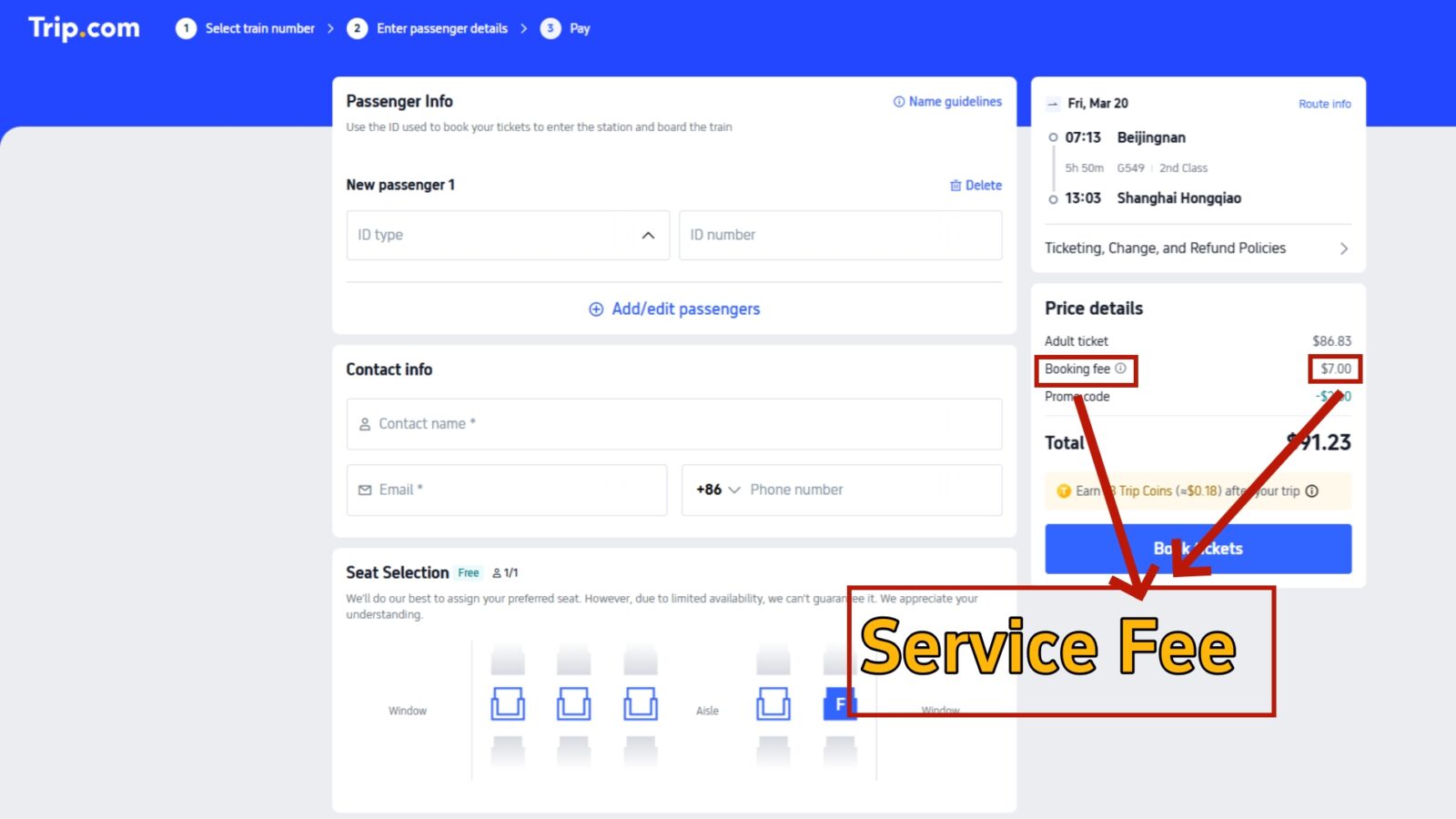
- Pricing Structure: Base fare plus markup. A variable service fee is applied to every single ticket you book, which can add up significantly if you are managing a long itinerary or traveling with a large group.
- Payment Gateway: Flawless international integration. The checkout process rarely triggers international fraud alerts from your home bank and accepts a wide variety of familiar digital wallets.
- Waitlist Priority: Secondary server pinging. While they offer a waitlist feature, their servers are just repeatedly pinging the official 12306 system on your behalf to look for openings, which is inherently slightly slower than being in the official native queue.
Direct Platform Comparison
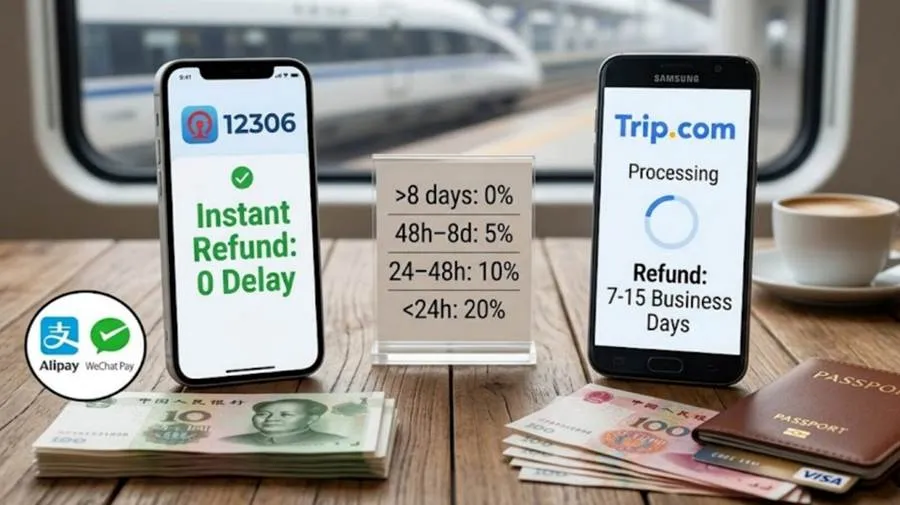
When you strip away the marketing, choosing between these two platforms comes down to how you value your time versus your travel budget. If you are a backpacker monitoring every expense, paying a third-party fee for every leg of your journey simply does not make mathematical sense. You are much better off getting your passport verified early on the official app. But if you only have a strict two-week vacation and want absolute certainty that your credit card will work on the first try, paying a small premium to avoid technical headaches is a very logical business decision.
To make this as clear as possible, I have organized the hard data side-by-side. Reviewing this table usually helps travelers immediately identify which system matches their specific tolerance for digital troubleshooting.
Feature Category China Railway (12306) Trip.com Initial Cost Official rate only Official rate + Service Fee Verification Speed Delayed (Manual human review) Instant (Automated setup) Foreign Checkout Can be temperamental Highly optimized and reliable Waitlist Success Highest (Direct system integration) Moderate (Third-party server pinging) Support Options Basic email and phone support 24/7 Global in-app live chat Ticket Changes Handled directly in-app Handled via agency interface
The takeaway? Neither app is perfect for every scenario. Many regular travelers, myself included, keep both apps on our phones and use the official one for normal bookings at a lower price, switching to the international agency app if the foreign credit card is balky or if we need to book a ticket for a friend who has yet to verify their passport.
Managing Your Accommodation Logistics
Once you have your train tickets booked, the next challenge comes when you land and need to figure out where (legally) you can spend the night. Hotels in China are legally required to register all patrons with the local Public Security Bureau, and not every hotel has the special license needed to house foreign passport holders. Just thoughtlessly booking any old guesthouse or cheap hotel you found online will land you at the front desk getting turned away at the 11th hour.
This introduces a whole new layer of digital planning to your itinerary. You need a platform that clearly filters for foreigner-friendly properties while reliably processing your international payments. Since the apps you use for trains do not always offer the best hotel inventory or mapping tools, choosing the right accommodation booking site is just as critical. For a detailed breakdown of how to navigate this specific challenge, I highly recommend reading this conprehensive analysis about ctrip, booking & agoda.
Aligning your train arrivals with your hotel check-ins saves you a massive amount of logistical stress. The major high-speed rail stations in cities like Beijing, Shanghai, and Guangzhou are massive transit hubs located far from the city centers. Booking a verified, foreigner-friendly hotel that is easily accessible from your specific arrival station via the local subway network will make your first few hours in a new city significantly smoother.
Practical Booking Strategies
No matter which train app you choose to download, one thing is very important if you want to get a seat: knowing the basic rules of how the mechanical railway system in China works. Train tickets go on sale exactly 15 days before your travel date. If, say, you want to go by train from Beijing to Xi’an, you cannot just log in randomly, one afternoon a month ahead of your desired date of travel, and just start looking for availability. You need to know exactly at what minute of what hour inventory for your departing train will be released, station by station (it’s slightly different depending on which city station you’re leaving from) at different times of day, and both platforms will show you what that exact schedule looks like.
So my normal practice is to get everything set up and staging in advance, well in advance of that fifteenth day. I make very sure everyone’s profile (for the passengers in my group) is filled out entirely and saved in station. Passenger name has to be as stated in passport (including middle names), and correct passport number and date of birth. Any one mistake will cause the auto turning gate to eject you at the station. Here are the basic tactics you need to build into your booking strategy:
- Release Timing: Set an exact alarm. Check the specific release time for your departure station, log into your chosen app at least ten minutes early, and refresh the screen exactly on the minute the inventory drops.
- Profile Preparation: Pre-save traveler data. Input and double-check all passport names, numbers, and birth dates into the app’s passenger contact list days in advance so you can bypass data entry and check out with one click.
- Waitlist Action: Fund immediately. If a popular train shows as sold out the exact second it opens, do not waste time browsing other days; immediately submit and fund your waitlist request to secure your spot in the queue.
- Boarding Process: Scan your physical passport. Both platforms utilize a fully digital e-ticket system; there are no paper tickets to collect. You simply scan the physical passport you used during the booking process at the electronic station gates to access the platform.